

How Digital Twins in Healthcare Improve Efficiency
Healthcare systems worldwide are under increasing pressure. Rising patient volumes, staff shortages, infrastructure limitations, and operational inefficiencies are stretching hospitals beyond capacity. While investments in technology have improved, many hospitals still struggle with fragmented systems and reactive decision-making.
This is where digital twin technology in hospitals is emerging as a transformational solution.
By creating virtual replicas of physical assets, workflows, and systems, hospitals can simulate, predict, and optimize operations in ways previously impossible. When combined with enterprise generative AI, IoT in healthcare systems, and advanced healthcare system modeling, digital twins are rapidly becoming a cornerstone of modern healthcare digital transformation.
What Is a Digital Twin in Healthcare?
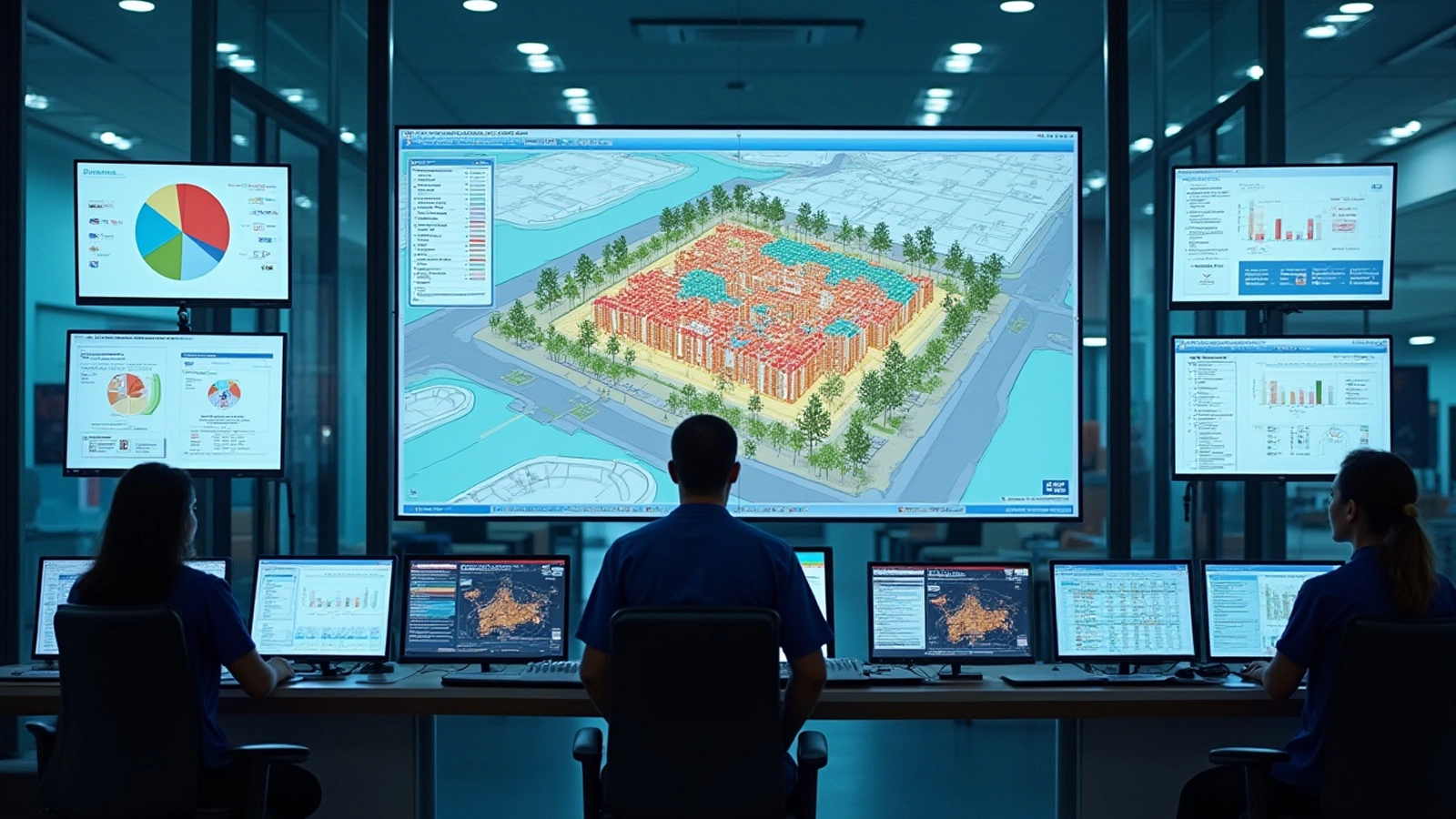
A digital twin in healthcare is a real-time, data-driven virtual representation of a physical healthcare environment. This can include hospital infrastructure, medical devices, patient flow, staff movement, and even clinical pathways.
Unlike traditional analytics tools, healthcare digital twins continuously ingest data from:
- IoT-enabled medical devices
- Hospital information systems (HIS)
- Electronic health records (EHRs)
- Bed management and scheduling systems
- Supply chain and logistics platforms
The result is a living digital model that accurately mirrors real-world operations, allowing hospitals to simulate scenarios before implementing changes.
According to research, digital twin applications can reduce operational costs by up to 30% while improving asset utilization and decision accuracy.
Why Hospitals Are Turning to Digital Twin Technology
Healthcare environments are uniquely complex. A delay in one department can cascade across the entire hospital. Traditional dashboards show what has already happened. Digital twins show what will happen.
Key Challenges Hospitals Face Today
- Bed shortages and overcrowding
- Inefficient patient flow
- Equipment underutilization
- Rising operational costs
- Supply chain disruptions
- Staff burnout and scheduling inefficiencies
This is why hospital digital twin solutions are now being adopted to simulate operations, identify bottlenecks, and optimize workflows in real time.
How Digital Twin Technology Reduces Hospital Operational Costs
1. Optimized Resource Utilization
Digital twins help hospitals simulate patient inflow, discharge cycles, and staff allocation. This reduces idle resources and prevents overstaffing.
A study shows that predictive modeling using digital twins can improve hospital resource utilization by up to 25%.
2. Smarter Facility and Equipment Management
With IoT in healthcare systems, equipment usage and performance can be monitored continuously. Digital twins predict maintenance needs, reducing downtime and emergency repairs.
This directly lowers maintenance costs and improves equipment availability.
3. Improved Patient Flow and Reduced Wait Times
Through healthcare system modeling, hospitals can simulate patient movement across departments and identify congestion points before they become operational issues.
This improves:
- Admission efficiency
- Emergency response times
- Bed turnover rates
4. Data-Driven Cost Reduction
Hospitals using medical digital twin systems can model cost scenarios before making infrastructure or staffing decisions, avoiding unnecessary capital expenditure.
Based on research, digital twin-enabled healthcare operations can reduce operational costs by up to 20% while improving care delivery outcomes.
Digital Twins, Generative AI, and Smart Hospital Technologies
The real power of digital twins emerges when combined with enterprise generative AI and innovative hospital technologies.
Generative AI enhances digital twins by:
- Forecasting patient demand
- Optimizing staff schedules
- Predicting equipment failures
- Automating operational recommendations
This convergence enables hospitals to move from reactive operations to predictive and autonomous decision-making.
Smart Hospital Ecosystem

This loop enables continuous improvement without manual intervention.
Digital Twin in Healthcare vs Traditional Hospital Systems
| Features | Traditional Systems | Digital Twin Technology |
|---|---|---|
| Data Usage | Historical | Real-time + predictive |
| Decision Making | Reactive | Predictive and proactive |
| Resource Optimization | Manual | AI-driven |
| Cost Efficiency | Limited | High |
| Scalability | Rigid | Highly scalable |
Role of Digital Twins in Healthcare Digital Transformation
Healthcare digital transformation is not about replacing systems; it’s about connecting them intelligently.
Digital twins act as the orchestration layer that unifies:
- Clinical systems
- Operational platforms
- Supply chain data
- Infrastructure performance
This provides a holistic view of hospital performance, enabling leadership to make faster, more confident decisions.
How Digital Twins Impact Logistics and Supply Chain in Healthcare
Hospitals operate complex supply chains involving pharmaceuticals, equipment, consumables, and logistics.
By integrating AI in logistics and supply chain systems, digital twins help:
- Predict inventory shortages
- Optimize warehouse storage
- Reduce procurement waste
- Improve vendor coordination
This ensures that critical medical supplies are available when needed—without overstocking.
The Role of Outsourcing in Digital Twin Implementation
Implementing digital twin systems requires deep expertise across data engineering, cloud infrastructure, AI modeling, and domain knowledge. This is why many hospitals turn to software development outsourcing services.
Why Outsourcing Makes Sense
- Access to specialized digital twin expertise
- Faster implementation timelines
- Reduced in-house development costs
- Scalable teams based on project needs
Organizations increasingly rely on outsourcing and IT services to accelerate digital health initiatives while maintaining cost efficiency.
Outsourcing Custom Software Development for Healthcare Digital Twins
Hospitals adopting outsourcing custom software development models benefit from:
- Tailored digital twin platforms
- Integration with existing HIS and EHR systems
- Scalable cloud-native architecture
- Ongoing optimization and support
This approach allows healthcare providers to focus on care delivery while technology partners manage complexity.
Conclusion
Digital twins are no longer experimental technology in healthcare. They are becoming essential infrastructure for hospitals aiming to reduce operational costs, improve efficiency, and scale sustainably. By combining digital twin technology in hospitals, enterprise generative AI, and innovative hospital technologies, healthcare providers gain unprecedented visibility into operations and the ability to act before problems escalate.
As healthcare systems continue to evolve, those that invest early in medical digital twin systems, supported by robust technology assessment services and strategic outsourcing, will be best positioned to deliver high-quality care while controlling costs.
Technostacks helps healthcare leaders turn strategies into scalable, resilient hospital operations using digital twins, AI, and intelligent systems, from assessment to implementation.
FAQs
1. What is an ERP system, and how does it work in manufacturing?
An ERP system is an integrated software system that manages core business processes, including production planning, inventory management, finance, procurement, and supply chain operations. In manufacturing, an ERP system connects these functions in real time, enabling better visibility, cost control, and operational efficiency.
2. What does ERP stand for, and why is it important for manufacturers?
ERP stands for Enterprise Resource Planning. It is essential for manufacturers because it centralizes data across departments, reduces manual errors, improves production planning, and supports data-driven decision-making across the organization.
3. What is an ERP, and how is it different from SAP?
ERP is a category of enterprise software used to manage business operations, and SAP is one of the leading ERP vendors. In simple terms, SAP is an ERP system, but not all ERP systems are SAP.
4. What are some examples of ERP systems commonly used in manufacturing?
Common ERP systems examples for manufacturing include Microsoft Dynamics 365, SAP S/4HANA, Oracle NetSuite, Infor CloudSuite, and Odoo. Each ERP system serves different business sizes and operational complexities.
5. What is Microsoft Dynamics, and how does it function as an ERP system?
Microsoft Dynamics 365 is a cloud-based ERP platform that helps manufacturers manage finance, supply chain, operations, and customer data. It integrates closely with Microsoft tools such as Azure and Power BI, making it a popular ERP choice for scalable, data-driven manufacturing environments.
6. What is a cloud ERP system, and how does it support business growth?
A cloud ERP system is hosted on cloud infrastructure rather than on-premise servers. It supports business growth by enabling scalability, remote access, automatic updates, lower infrastructure costs, and faster deployment than traditional ERP systems.
7. How do ERP and cloud computing work together in modern manufacturing?
ERP and cloud computing work together by combining centralized business process management with scalable cloud infrastructure. This allows manufacturers to access real-time data, scale operations across locations, and more easily integrate advanced technologies such as analytics and AI.
8. What is ERP integration, and why is it critical for manufacturers?
ERP integration involves connecting the ERP system to other platforms, such as CRM systems, warehouse management systems, IoT devices, and analytics tools. For manufacturers, ERP integration is critical to eliminate data silos, improve production visibility, and ensure accurate reporting across the value chain.
9. How do manufacturers choose the right ERP system for manufacturing operations?
Manufacturers choose the right ERP system by evaluating business size, production complexity, integration requirements, cloud readiness, scalability, and long-term support. Selecting an ERP system for manufacturing is often guided by future growth plans rather than immediate needs alone.