


How to Identify Technology Gaps in Your Business Before Scaling
Scaling a business sounds exciting in boardrooms. More customers. More revenue. New markets. But behind every successful scale story is something less glamorous: infrastructure readiness. Many companies attempt to scale only to discover hidden friction points. Systems crash under higher load. Teams rely on spreadsheets to patch workflow inefficiencies. Data lives in silos. Integrations break. This is why leaders must identify technology gaps before scaling — often through structured technology consulting for growth. Addressing gaps in business operations early can mean the difference between controlled growth and operational chaos.
Why IT Weaknesses Become Costly During Expansion
Growth amplifies everything: revenue, demand, and weaknesses.
According to McKinsey, organizations that successfully align digital capabilities with growth strategies are 2.5 times more likely to outperform competitors financially.
Technology gaps rarely appear during stable operations. They surface when:
- Transaction volume spikes
- Teams double in size
- Systems integrate across departments
- Customer expectations rise
Before scaling business technology, clarity is essential.
How to Evaluate Technology Gaps in Business Before Growth
Identifying infrastructure gaps requires a structured approach. It is not about replacing systems immediately; it is about diagnosing friction.
Step 1: Conduct a Business Technology Assessment
A structured assessment evaluates whether existing tools, platforms, and workflows support future demand.
Key evaluation areas include:
| Assessment Area | Key Questions |
|---|---|
| Scalability | Can systems handle 3–5x current load? |
| Integration | Are data systems connected or siloed? |
| Security | Are compliance standards met? |
| Automation | Are manual tasks slowing productivity? |
| Performance | Are there recurring downtime incidents? |
According to IBM’s Cost of a Data Breach Report, the global average cost of a data breach reached $4.45 million in 2023, underscoring the need for secure infrastructure before scaling.
Step 2: Technology Audit for Businesses: A Practical Diagnostic Tool
A deeper audit evaluates infrastructure at operational, architectural, and strategic levels. This diagnostic process provides clarity beyond surface-level performance issues.
What a Technology Audit Covers
- IT infrastructure assessment
- Application architecture
- Data flow mapping
- Vendor and SaaS dependency analysis
- Technical debt identification
According to Deloitte, organizations that proactively audit their digital ecosystems achieve significantly higher transformation success rates than those that adopt reactively.
An audit reveals not just broken systems but also fragile ones.
Step 3: Signs Your Business Technology Is Not Scalable
Many leaders sense friction but cannot pinpoint its cause. Recognizing the warning signs that your business technology is not scalable is crucial.
Warning Indicators
- Systems slow during peak demand
- Reporting requires manual data consolidation
- Teams duplicate work across tools
- Integration failures occur frequently
- Scaling requires hiring more people instead of improving systems
If growth depends on increasing headcount rather than improving processes, scaling business technology may require urgent intervention.
Technology Gaps to Fix Before Scaling a Business
Before expanding operations, businesses must address specific technology gaps to ensure scalability.
1. Fragmented IT Infrastructure
An incomplete IT infrastructure assessment often reveals disconnected servers, cloud tools, and legacy systems. These silos reduce agility and increase operational risk.
2. Digital Transformation Gaps
Automation, analytics, or integration efforts often create gaps when implementation remains incomplete. According to Statista, more than 89% of large enterprises worldwide are pursuing digital transformation initiatives, but only a fraction fully integrates their systems across departments.
Partial transformation creates bottlenecks.
3. Data Silos
Data-driven decision-making breaks down when data lives on isolated platforms. Without unified dashboards or analytics integration, leadership decisions rely on incomplete insights.
Identifying and Fixing Technology Gaps
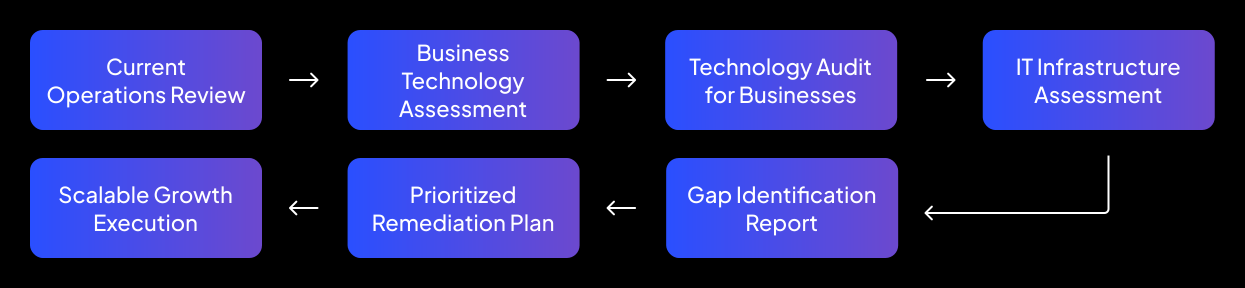
This structured flow prevents reactive upgrades during periods of high growth.
Scaling Business Technology: Strategy Over Speed
It is not about replacing every tool. It is about strengthening weak links before growth multiplies them.
Smart scaling includes:
- Cloud readiness planning
- API-based system architecture
- Cybersecurity reinforcement
- Automation-first process redesign
- Vendor consolidation
Digital Transformation Gaps vs Operational Gaps
Many leaders confuse operational inefficiencies with transformation gaps. They are not identical.
| Category | Operational Gap | Digital Transformation Gap |
|---|---|---|
| Cause | Manual workflow inefficiencies | Lack of integrated digital systems |
| Impact | Reduced productivity | Limited scalability |
| Fix | Process optimization | Technology modernization |
| Risk | Higher operational cost | Competitive disadvantage |
Recognizing this difference allows organizations to invest precisely rather than broadly.
Why Identifying Technology Gaps Is a Strategic Advantage
Organizations that align gap remediation with long-term IT competitiveness strategies gain a structural advantage during expansion.
Reactive scaling often leads to:
- Emergency infrastructure upgrades
- Cost overruns
- Customer experience degradation
- Security vulnerabilities
Strategic scaling, on the other hand, aligns technology with growth ambitions.
Conclusion: Growth Multiplies Strengths and Weaknesses
Scaling is not simply a milestone on a roadmap. It is a pressure test on every system, workflow, and dependency your business relies on. As demand increases, integrations are stretched, automation layers are tested, and infrastructure limitations become visible. What once felt manageable at a smaller scale can quickly evolve into operational friction.
Successful organizations don’t move the fastest; they pause, evaluate, and strengthen first. Conducting a business technology assessment and addressing digital gaps early creates a scalable architecture that supports growth. Technology gaps don’t resolve themselves and worsen under pressure. Identifying and fixing them before expansion helps leadership scale with confidence, clarity, and resilience.
For businesses preparing to grow, an independent review of systems, infrastructure, and scalability readiness often provides the insight needed to move forward strategically. Technostacks works with organizations to assess technology maturity, identify hidden gaps, and design scalable digital foundations aligned with long-term growth goals. If your team is preparing for expansion or evaluating operational readiness, initiating a structured conversation with Technostacks can help ensure your next growth phase is built on stability rather than strain.
FAQs
1. How do you identify technology gaps in business before scaling?
To identify technology gaps in business before scaling, companies should conduct a structured business technology assessment that evaluates system scalability, integration readiness, automation levels, data visibility, and infrastructure performance. This process helps uncover weaknesses that may limit growth.
2. What is a business technology assessment, and why is it important?
A business technology assessment is a structured evaluation of existing systems, infrastructure, and workflows to determine their readiness for growth. It helps organizations detect technology gaps in business operations and prioritize upgrades before scaling business technology.
3. What are the most common technology gaps to fix before scaling a business?
It includes fragmented IT systems, manual workflows, poor data integration, outdated infrastructure, security vulnerabilities, and limited automation. Addressing these gaps ensures operational stability during expansion.
4. What is the difference between a technology audit for businesses and an IT infrastructure assessment?
A technology audit for businesses evaluates the overall digital ecosystem, including applications, vendors, integrations, and technical debt. An IT infrastructure assessment focuses specifically on servers, networks, cloud systems, cybersecurity, and performance scalability. Both are essential for identifying gaps in digital transformation.
5. What are the signs that your business technology is not scalable?
It includes system slowdowns during peak demand, frequent integration failures, reliance on manual reporting, duplicated data across tools, and increased hiring to compensate for inefficient processes.
6. How do digital transformation gaps impact scaling business technology?
This occurs when modernization efforts are incomplete or poorly integrated. These gaps can create bottlenecks, limit automation, and reduce operational visibility, making scaling business technology risky and inefficient.
7. Why is it important to recognize technology gaps before business expansion?
It prevents operational breakdowns, reduces security risks, and ensures systems can handle increased transaction volume. A proactive approach minimizes costly emergency upgrades during growth phases.
8. How often should businesses conduct a technology audit for scaling readiness?
Businesses preparing for expansion should conduct a technology audit at least once before major growth initiatives such as entering new markets, launching new products, or doubling operational capacity. Regular assessments help maintain scalability and reduce long-term technical debt.