

SAP vs ERPNext: Which ERP Should Modern Businesses Choose in 2026
The ERP Decision That Can Save Your Business Millions
Choosing an ERP system is no longer just about accounting or inventory. Today, an ERP becomes the digital backbone of every organization.
Modern ERP platforms connect core business functions including Sales, CRM, Procurement, Manufacturing, HR, Finance, Warehousing, Customer Portals, Mobile Apps, AI solutions, IoT devices, and Business Intelligence. However, many organizations still struggle with ERP systems that are costly to maintain and difficult to customize. This is why comparisons like SAP vs ERPNext are becoming increasingly relevant. Businesses today are moving beyond expensive software investments and looking for flexibility, scalability, and greater operational freedom.
Why Businesses Are Moving Away From Traditional ERP Licensing
Traditional enterprise ERP platforms like SAP offer robust capabilities, but many businesses are reevaluating whether the long-term cost and complexity justify the investment. As organizations grow, challenges often emerge that impact scalability and operational efficiency.
Common concerns include:
- High ERP licensing costs and recurring annual maintenance fees
- Per-user pricing models that increase expenses as teams expand
- Expensive implementation processes and complex customizations
- Heavy reliance on vendors with slower upgrade and development cycles
For growing businesses, these costs continue to rise year after year. Instead of allocating budgets toward innovation, digital transformation, and operational improvements, companies often find themselves spending a significant portion of resources maintaining software licenses. This shift is driving many organizations to explore more flexible, scalable, and cost-efficient ERP alternatives.
SAP vs ERPNext: Direct Comparison
| Feature | SAP | ERPNext |
|---|---|---|
| Licensing | Paid per-user + module costs | Open source — zero license fees |
| Annual Fees | Yes — ongoing maintenance | None for self-hosted |
| Custom Development | Complex ABAP language, slow cycles | Python (Frappe), fast iteration |
| API Design | Capable but complex | REST API-first, modern |
| Frontend Flexibility | Limited to SAP UI | Unlimited — React, Vue, Angular |
| Deployment | Enterprise cloud | SME to enterprise, self-hosted or cloud |
| AI Integration | Proprietary SAP BTP add-ons | Native — OpenAI, Gemini, OCR direct integration |
| TCO (5 Years) | $500K–$2M+ | $100K–$400K |
1. Lower Total Cost of Ownership (TCO)
When evaluating ERP solutions, businesses often focus only on implementation costs while overlooking the Total Cost of Ownership (TCO). The actual cost includes licensing fees, user expansion, maintenance, upgrades, and ongoing support. ERPNext helps reduce these recurring expenses, allowing businesses to allocate more resources toward growth and innovation instead of software costs.
2. Unlimited Frontend Flexibility
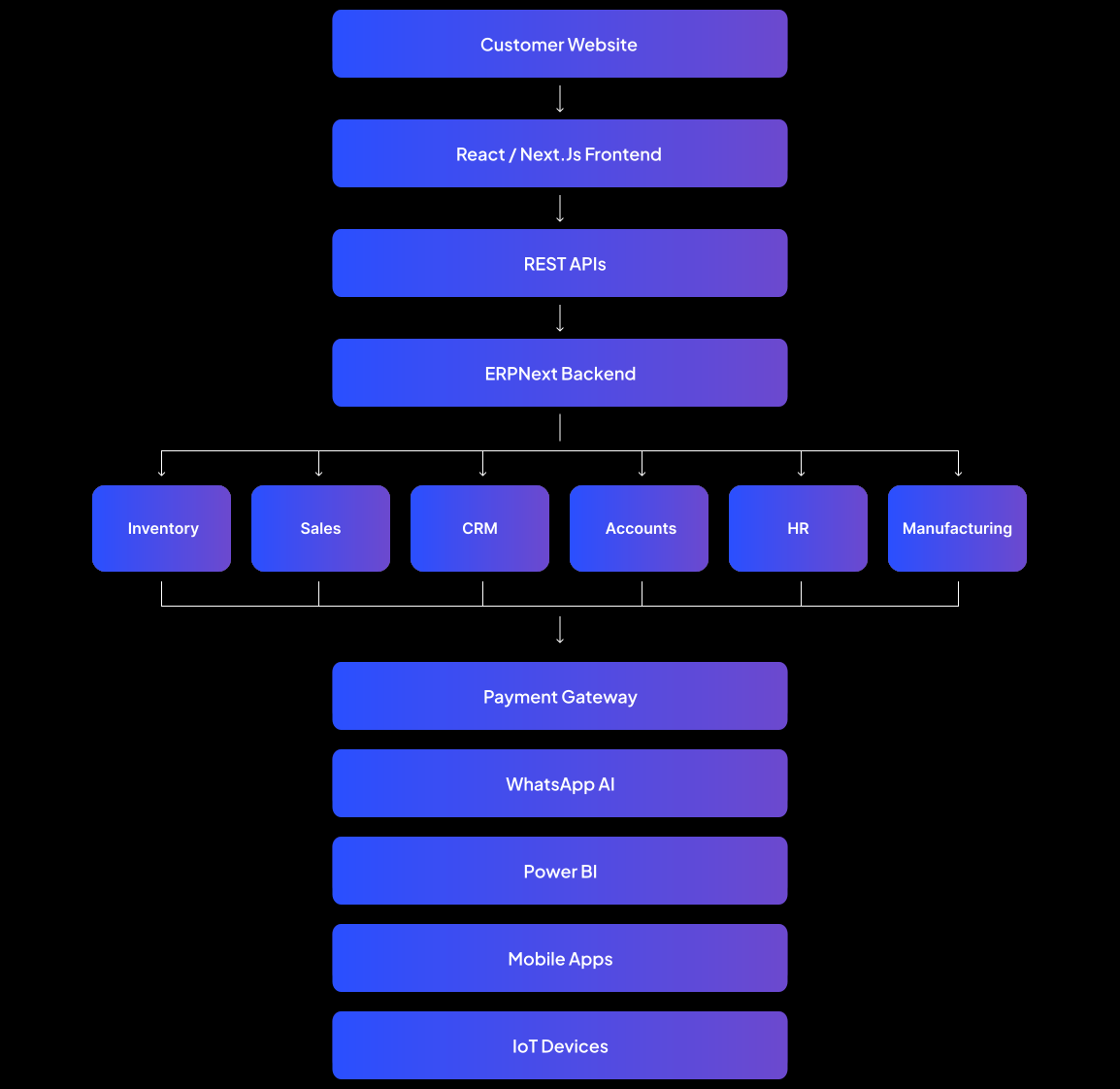
ERPNext provides the flexibility to separate frontend and backend systems, enabling businesses to create customized user experiences beyond traditional ERP interfaces. Companies can build customer portals, employee dashboards, mobile apps, and business applications using technologies like React, Next.js, Angular, Flutter, and more, while ERPNext continues managing core business operations efficiently.
Looking for a Custom ERPNext Solution?
Explore how a customized ERPNext ecosystem can support your business goals.
Discuss Your Project
3. Faster Custom Workflow Development
Every business has unique operational processes, and traditional ERP customization can often be time-consuming and expensive. ERPNext enables faster development of custom workflows such as purchase approvals, HR processes, manufacturing workflows, quality control, and service management, helping businesses improve agility and operational efficiency.
4. Python-Based Architecture for Scalability
ERPNext is built on the Python-based Frappe Framework, offering a scalable, flexible, and easy-to-maintain development environment. With Python’s large global developer ecosystem and growing adoption in AI and automation, businesses benefit from easier customization and long-term technology support.
5. Hybrid ERP Development for Modern Businesses
Modern organizations rely on multiple connected systems, including mobile apps, CRM platforms, AI tools, IoT devices, customer portals, and payment solutions. ERPNext supports hybrid architecture, making it easier to integrate business applications and create a connected digital ecosystem.
How a Modern ERPNext Architecture Connects Business Systems
6. Easy API Integrations
ERPNext offers flexible API integration capabilities, making it easy to connect with business systems such as eCommerce platforms, mobile applications, payment gateways, logistics providers, barcode systems, biometric devices, AI tools, and IoT solutions. This helps businesses create a connected and streamlined digital ecosystem.
7. AI-Ready ERP Platform
As AI in Business process automation continues to grow, businesses need ERP systems that can support intelligent automation and data-driven decision-making. ERPNext enables seamless integration with AI technologies for chatbots, OCR, predictive analytics, AI-powered reporting, voice assistants, and business intelligence solutions.
8. Custom Dashboards for Better Decision-Making
Different departments require different business insights. ERPNext allows organizations to build customized dashboards for sales, finance, HR, warehouse management, manufacturing, procurement, and customer support teams, helping improve visibility and operational decision-making.
9. Scale Your Business Without Licensing Constraints
Business growth often leads to increased software costs in traditional ERP systems due to user-based licensing models. ERPNext offers greater scalability, allowing businesses to expand operations and teams without significant increases in ERP licensing expenses.
Why Companies Prefer Custom ERPNext Solutions
Modern businesses need more than a standard ERP system. They require solutions tailored to their unique workflows and operational requirements. A custom ERPNext implementation can include industry-specific workflows, custom dashboards, customer and vendor portals, dealer management, manufacturing automation, mobile applications, AI-powered reporting, document management, and business intelligence features.
By aligning technology with business processes, ERPNext becomes more than an operational system—it becomes a strategic asset that drives efficiency, scalability, and long-term business growth.
How Technostacks Helps Businesses Build Smarter ERP Solutions
At Technostacks, we help businesses build scalable and customized ERPNext solutions designed around their unique workflows and operational goals. By combining ERP consulting expertise with modern engineering practices, we deliver flexible ERP systems that improve efficiency, automation, and business growth.
Our ERPNext Services
- ERPNext Implementation & Migration
- Custom ERP Modules & Workflow Automation
- API Development & Third-Party Integrations
- React / Next.js Custom Frontend Development
- AI Integration & Intelligent Automation
Our Technology Stack
- Backend: Python, Frappe, FastAPI
- Frontend: React, Next.js, Vue.js
- Mobile: Flutter, React Native
- Cloud: AWS, Docker, Kubernetes
- AI & Automation: OpenAI, Gemini, OCR
Is ERPNext Right for Every Business?
ERPNext may not be the ideal choice for every organization. Large enterprises with highly complex operations, specialized industry requirements, and deeply integrated enterprise ERP ecosystems may require more extensive solutions.
However, for businesses seeking lower total cost of ownership, faster ERP implementation, flexible customization, seamless integrations, modern user experiences, and reduced vendor dependency, ERPNext offers a scalable and cost-effective ERP solution that supports long-term business growth.
Explore Technostacks’ ERP and custom software capabilities at technostacks.com/services/
Conclusion
Your ERP decision should follow from understanding what your business actually needs—not vendor positioning. If you’re evaluating ERP options in 2026, start with a process review to identify your operational requirements. The right platform will emerge from that analysis.
Ready to evaluate ERPNext for your business? Contact Technostacks for an ERP consultation.
Frequently Asked Questions: SAP vs ERPNext in 2026
1. Can ERPNext handle enterprise-scale operations?
Yes. ERPNext handles complex multi-entity, multi-currency, multi-warehouse operations. It’s used by organizations from SMEs to large enterprises. Architecture differs from SAP, not a capability ceiling.
2. How difficult is migration from SAP to ERPNext?
Depends on existing customization depth. Heavily customized SAP requires a thorough process audit. Standard SAP with limited customization migrates more easily. We recommend phased migration starting with isolated functions.
3. Is ERPNext suitable for manufacturing?
Yes. The full manufacturing module covers Bill of Materials, work orders, production planning, quality control, and shop floor management. Frappe Framework makes custom extensions straightforward.
4. What does ERPNext implementation cost vs. SAP?
Implementation typically costs less due to simpler tooling and a larger Python developer pool. Complex custom frontends or deep API integrations add cost regardless of ERP. The major difference emerges in Year 2+: ERPNext has no recurring license burden.
5. Can ERPNext integrate with Shopify, WhatsApp, payment gateways?
Yes. REST API connects to Shopify, WooCommerce, WhatsApp Business API, Razorpay, Stripe, and logistics platforms. Technostacks has built these integrations across logistics, manufacturing, and e-commerce.
6. How does ERPNext handle multi-company and multi-currency?
Natively. Multi-company accounting, intercompany transactions, multi-currency operations, exchange rate management, and consolidated reporting are standard.
7. What support is available if something goes wrong?
ERPNext has an active open-source community, official documentation, and commercial support from Frappe. Implementation partners like Technostacks provide ongoing support contracts. You’re never dependent on a single vendor’s support timeline or pricing.