

A Multi-Agentic Enterprise Solution by Technostacks
The Enterprise AI Platform is a next-generation solution that automates complex business processes, enhances operational efficiency, and enables intelligent decision-making. Powered by a Multi-Agentic architecture, it orchestrates autonomous AI agents, streamlines cross-functional workflows, and delivers real-time insights, driving enterprise productivity, scalability, and digital transformation.
Client
A USA-based tech-enabled enterprise
Industry
Logistics & Last-Mile Delivery
Services
Agentic AI

Scroll Down
The Operational Shift
Before implementing the Multi-Agentic platform, a driver-reported damage incident initiated a lengthy chain of emails, phone calls, and manual approvals. The absence of automated coordination meant that resolution often took 24-48 hours, placing operations managers in a constant firefighting mode and delaying critical maintenance decisions.
With the new platform, a single incident automatically triggers a coordinated sequence of AI actions: The Vision Agent classifies the damage, the Compliance Agent verifies safety requirements, and the Communication Agent generates the necessary maintenance ticket. What once required days is now completed in under 30 seconds, enabling managers to focus on strategic oversight and continuous operational improvement rather than administrative coordination.
Challenges
- Communication silos across distributed asset networks slow operational coordination and decision-making.
- Fragmented data sources limit enterprise-wide visibility and actionable insights.
- Administrative bottlenecks create delays in maintenance and operational workflows.
- Manual governance fosters reactive processes and suboptimal asset utilization.
- Inconsistent oversight increases compliance and operational risk.
- The absence of a centralized, intelligent orchestration layer hinders real-time visibility, scalability, and strategic agility.
Solution: Multi-Agentic Architecture
Technostacks developed a unified platform leveraging a Multi-Agentic framework to handle specialized tasks with precision and safety.
The following diagram illustrates the interaction between the multi-agent system and the various data sources:
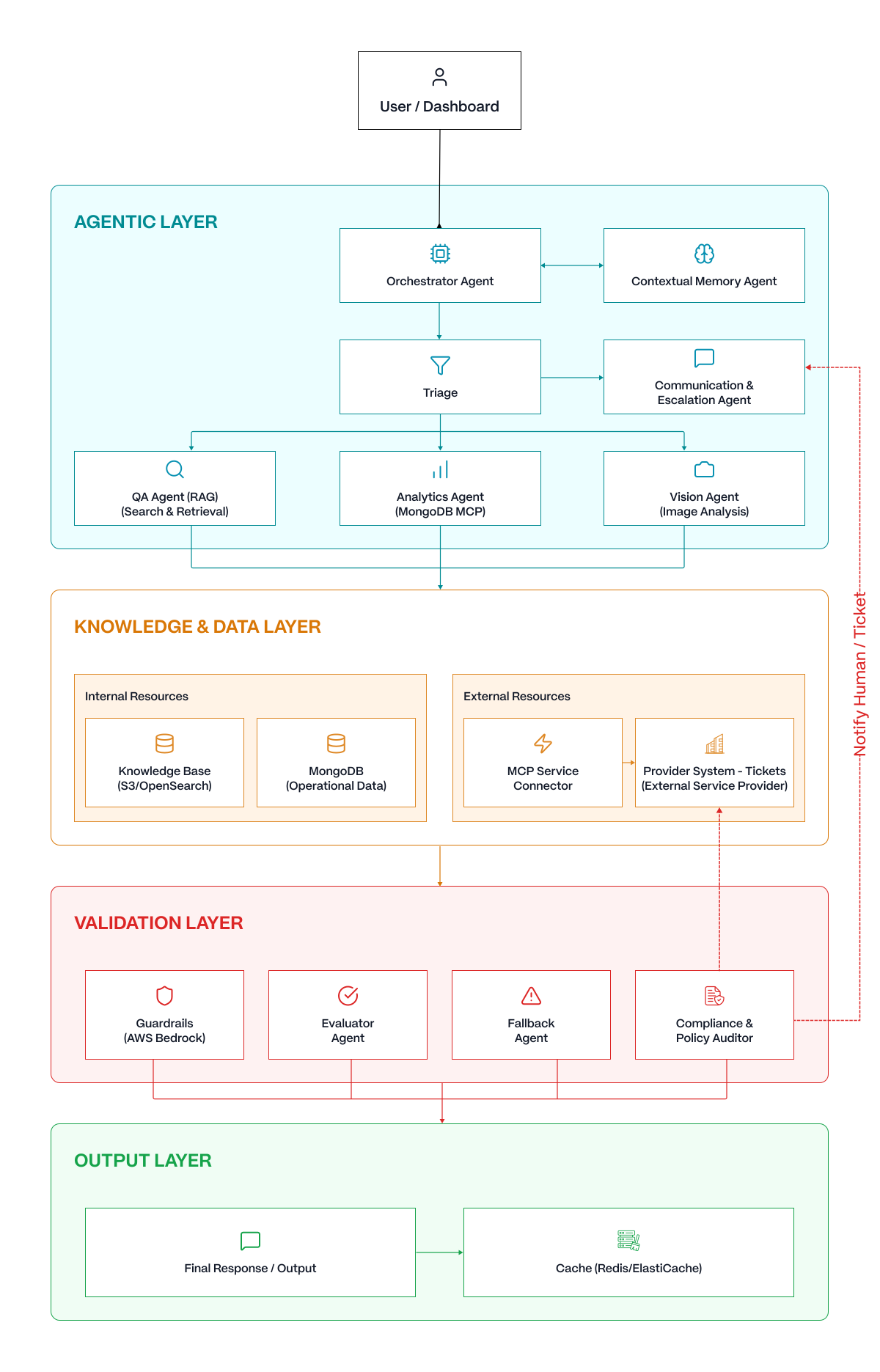
Enterprise-Grade Agentic Core Logic & Conversational Intelligence
Orchestration Agent
Acts as the brain, routing intents to the appropriate specialized agent.
Q&A Agent
Leverages Role-Based Access Control (RBAC) and RAG (Retrieval-Augmented Generation) to answer queries with citations and references.
Evaluator Agent
Validates responses against fallback rules to eliminate hallucinations and ensure the user’s requirements are met.
Contextual Memory
Agent
Manages long-term state and session history, ensuring agents provide personalized, informed responses across interactions.
Compliance &
Policy Auditor Agent
Intercepts actions before execution to cross-reference them against regulatory libraries and internal safety policies, ensuring all operations remain compliant.
Communication &
Escalation Agent
Monitors system performance and failure logs to dynamically handle human hand-offs, assigning urgent issues to relevant human managers and drafting context-aware communications.
Fallback Agent
Provides standardized, helpful messaging during failure cases to maintain user trust.
Data Integration & Search
Data Integration
(MongoDB MCP)
Facilitates real-time, schema-less querying directly into the database to provide instant analytics and operational insights.
Hybrid Search
Capabilities
Combines keyword and semantic search (OpenSearch) with clickable references that link back to historical message contexts.
Enterprise Governance & Security
Auditability
Every agent action, from ticket creation to database querying, is logged, ensuring a 100% auditable trail for compliance.
RBAC
(Role-Based Access Control)
Data access is strictly compartmentalized; an agent querying the MongoDB for a local depot cannot access sensitive regional financial data.
Hallucination Mitigation
The Evaluator Agent and Guardrails act as a final filter, ensuring all LLM outputs are cross-referenced with internal Knowledge Base truths before reaching the end-user.
Technologies Used
LangGraph
Agentic Framework
AWS Bedrock
(LLMs, RAG, Guardrails)
Python
(FastAPI)
React.js
MongoDB
(MCP)
OpenSearch
(Semantic Search)
Amazon RDS
Amazon S3
AWS ElastiCache
(Redis)
Model Context Protocol
(MCP)
The “Future-Proof” Advantage (MCP)
- Scalable Integration : New enterprise systems and third-party tools are connected through lightweight MCP connectors rather than costly AI reengineering.
- AI–Data Decoupling : The Model Context Protocol separates agent intelligence from underlying data sources, eliminating dependencies on individual platforms and silos.
- Future-Ready Architecture : As the organization evolves, the platform scales seamlessly while avoiding vendor lock-in, ensuring long-term flexibility and investment protection.
Agentic AI Workflows
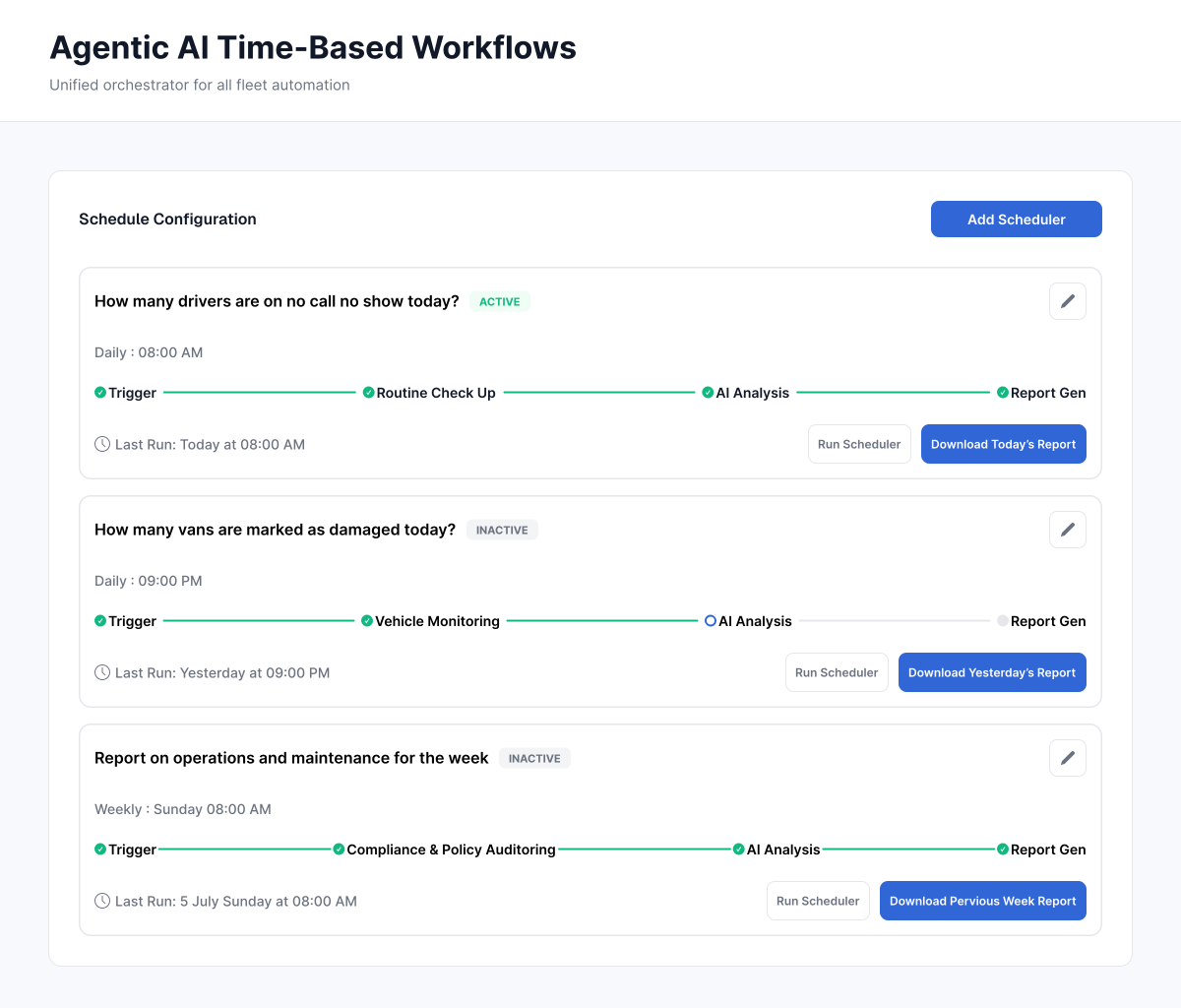
The Agentic AI Workflows tab provides stakeholders with a visual command center, showcasing how the platform automates complex operational decisions in real-time. This interface maps the flow of data and decision-making processes across three critical automation paradigms:
Time-Based Workflows
These workflows automate routine administrative and operational tasks, ensuring consistent organizational discipline and system health without requiring manual human intervention.
AI Workforce &
Shift Monitoring
AI monitors workforce schedules and attendance in real time to identify staffing shortages, absenteeism, and operational coverage gaps.
AI Asset
Health Monitoring
AI analyzes asset data and incident reports to detect potential failures and trigger proactive maintenance workflows.
Operations &
Maintenance Insights
AI consolidates maintenance, uptime, and resource data into real-time operational insights for faster decision-making.
Automated Compliance Reporting
AI generates audit-ready compliance reports by validating operational data against regulatory and internal standards.
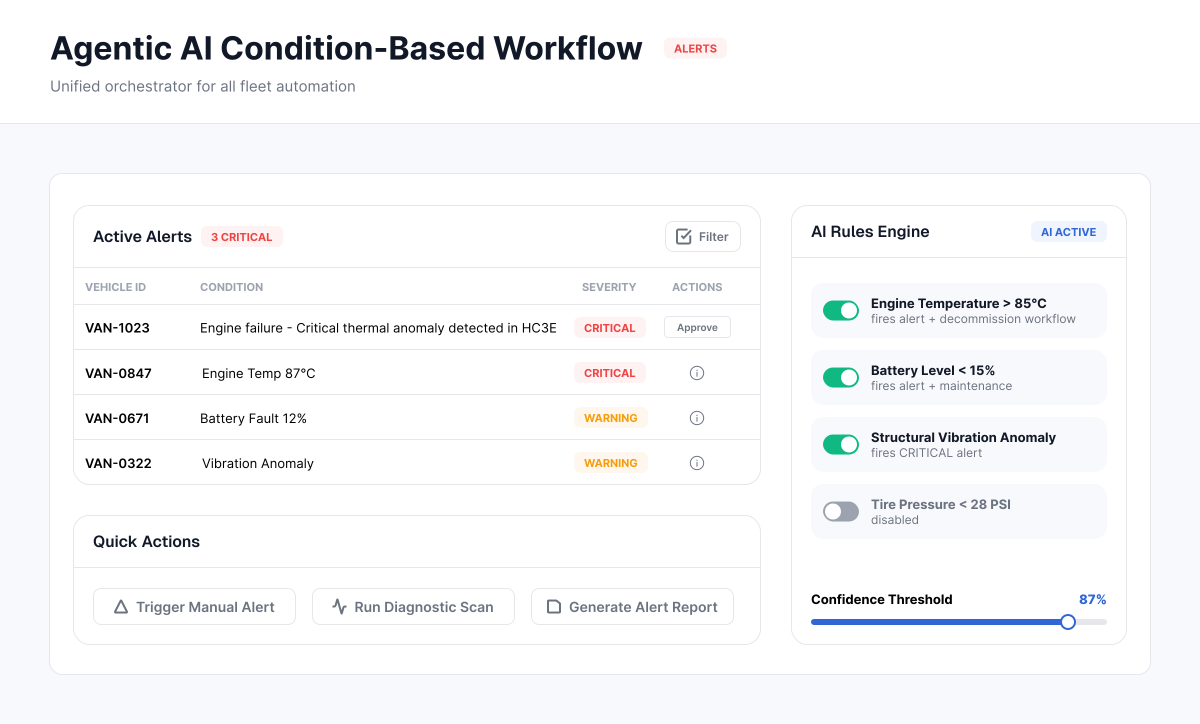
Condition-Based Workflows
These workflows drive proactive enterprise management by automatically responding to specific data thresholds, telemetry inputs, or critical incidents without requiring constant human oversight.
Critical Failure
Detection
AI detects critical system failures, isolates affected assets, and automatically triggers high-priority maintenance alerts.
Predictive Resource
Monitoring
AI tracks battery, fuel, and power levels, sending proactive alerts before assets reach critical operating thresholds.
AI Vibration
Anomaly Detection
Real-time sensor analysis identifies abnormal vibrations to prevent equipment failures and improve operational safety.
Environmental Health Monitoring
AI continuously monitors environmental conditions and operational parameters to optimize asset performance and extend equipment lifespan.
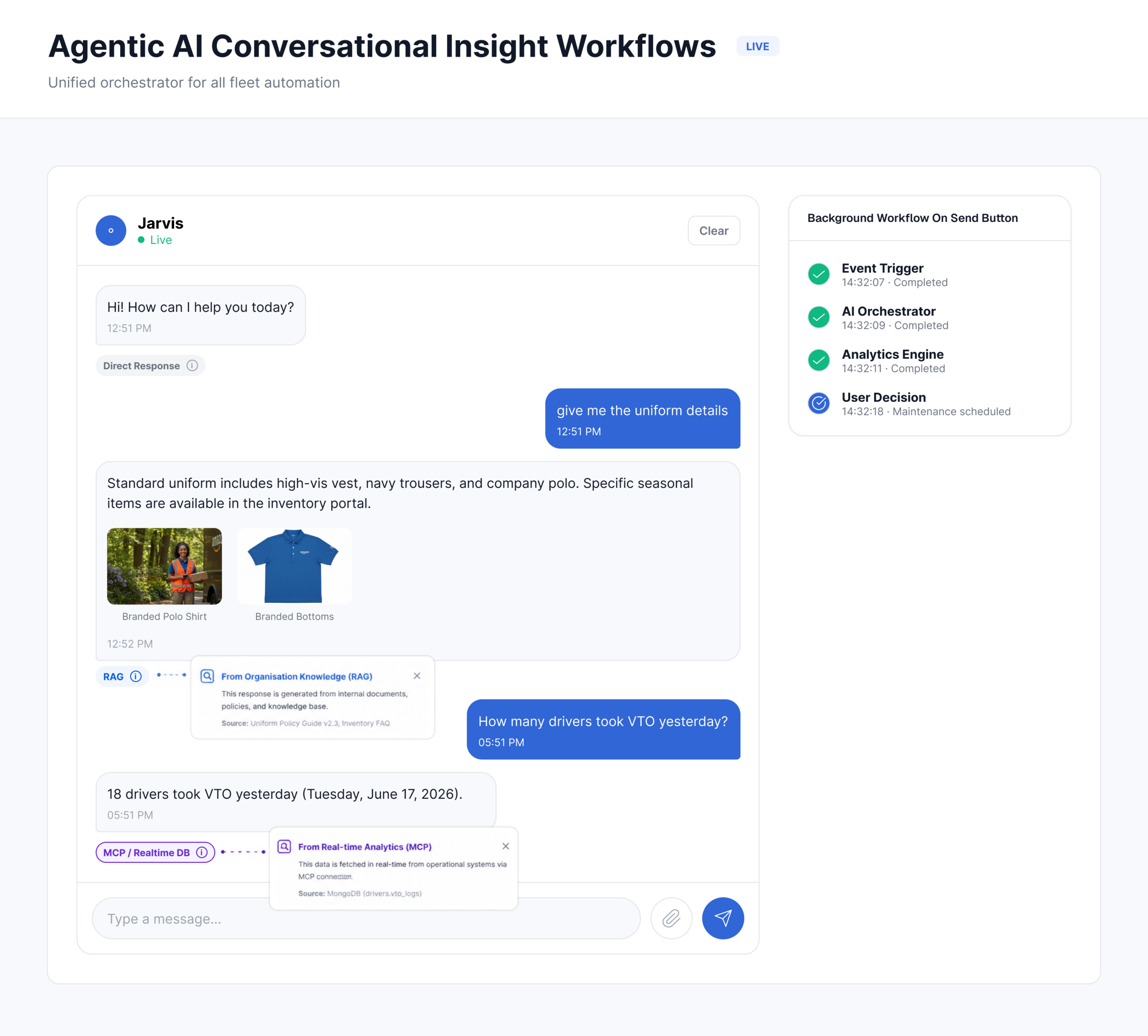
Conversational Insight Workflows
These workflows utilize an intelligent chat ecosystem to provide immediate access to enterprise intelligence, bridging the gap between unstructured company documentation and live transactional databases.
Organizational Knowledge Retrieval
RAG-powered AI instantly retrieves accurate answers from company policies, SOPs, and internal documents with source-backed references.
Real-Time
Operational Analytics
MCP securely connects to live enterprise systems, enabling real-time operational insights through simple natural language queries.
The Agentic Dashboard & Enterprise Operations Oversight
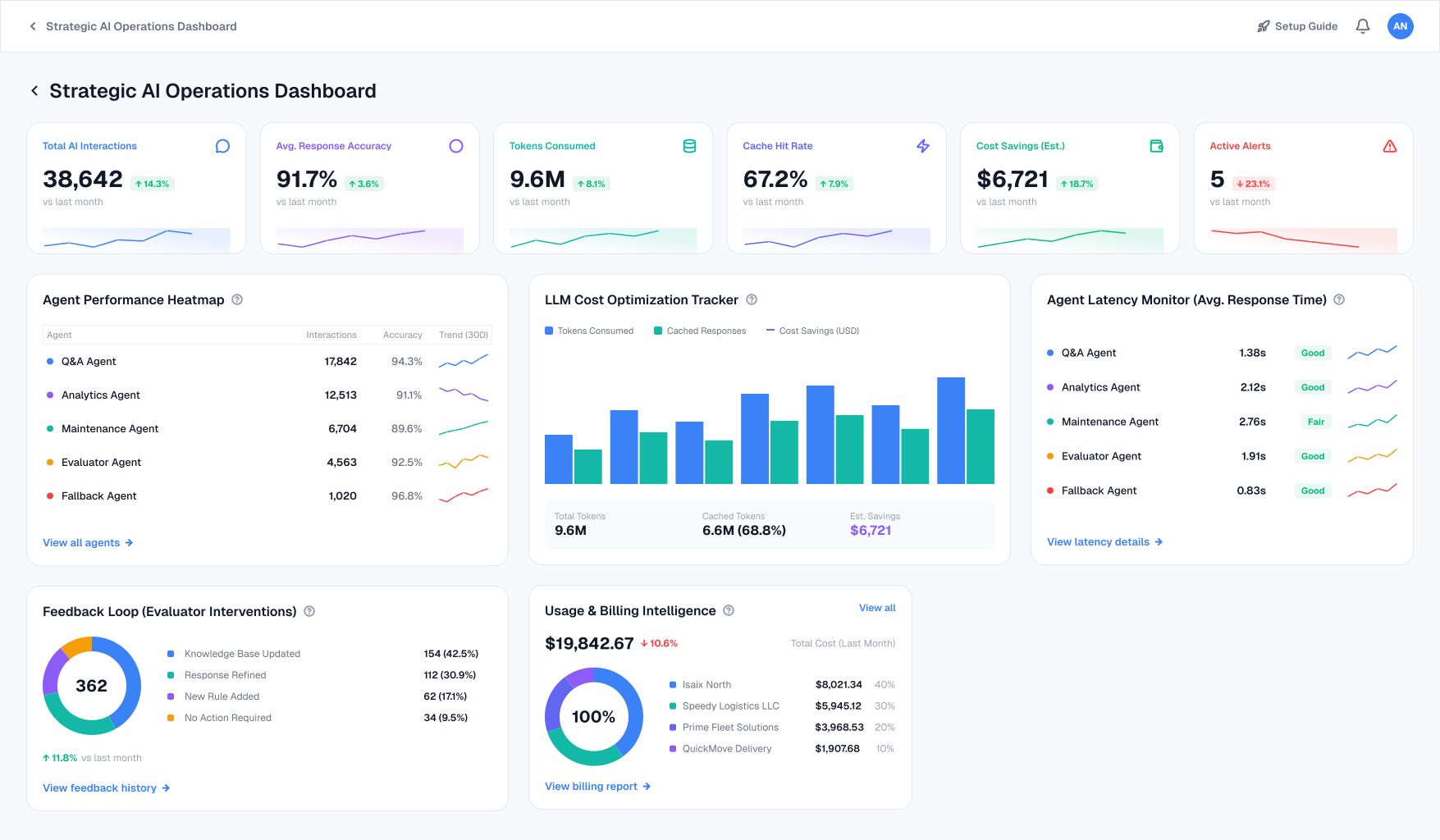
The centralized dashboard provides a granular view of AI performance and operational health.
Strategic Dashboard Enhancements for Agentic Optimization
Agent Performance
Heatmap
Visualize which agents (Q&A, Analytics, Maintenance) are most active and their respective accuracy scores.
LLM Cost
Optimization Tracker
Real-time monitoring of token consumption versus cached responses (ElastiCache) to show cost savings over time.
Predictive Operational
Risk Score
An AI-generated metric for each vehicle based on maintenance history and agent-analyzed image reports.
Feedback Loop
Visualization
A dashboard view showing where the Evaluator Agent intervened, helping managers see how the Knowledge Base is evolving over time.
Agent Latency
Monitor
Track the “thinking time” of individual agents to optimize model selection (e.g., switching between Nova Lite and larger models).
Usage & Billing
Intelligence
Automated tracking of AI feature consumption on a per-company basis, enabling precise billing based on token usage and API calls.
Intelligent Maintenance
Agents
A multi-agent system categorizes vehicle status based on driver-uploaded imagery.
- Major Damage Agent: Identifies critical issues requiring immediate decommissioning and manual inspection.
- Minor Damage Agent: Generates advanced maintenance tickets automatically, allowing the vehicle to remain in service for minor repairs.
Vision-Powered
Reporting
AI agents analyze visual evidence to produce immediate damage report drafts, significantly reducing the administrative burden on managers.
Operational Impact
“Before implementing this platform, my team spent 40% of their day manually coordinating maintenance tickets and verifying compliance. Now, we spend that time on strategic asset planning. The system doesn’t just manage data; it manages our peace of mind.” — Operations Manager, Enterprise Logistics Client
Future Roadmap
Predictive-Prescriptive Intelligence
The next evolution of our platform will move beyond automating current workflows to predicting future operational constraints. We are currently developing a “Supply Chain Optimization Agent” that will integrate with external logistics market data to proactively order vehicle parts based on predicted usage patterns, moving us from “Automated Maintenance” to “Predictive Asset Lifecycle Management.”
Ready to Transform Your Operations?
If your enterprise is struggling with data silos, operational bottlenecks, or compliance risks, this Multi-Agentic platform offers a scalable, secure path to AI-driven autonomy. Contact the Technostacks team for a personalized architecture assessment and platform demonstration.
Our Solutions in Action
Read how we have transformed businesses along the way.
-
Industrial • ERP • Product Engineering: From Walk-In to Delivery: Digitizing Eyewear Retail Operations

From Walk-In to Delivery: Digitizing Eyewear Retail Operations
Imagine every customer who walks in for an eye exam walking out with a fitted, ordered, and fully tracked pair of glasses, connected end to end by a single record, from the first hello throu…

-
Industrial • Digital Products • Product Engineering • Strategic Consulting: Modernizing Chemical Manufacturing with ERPNext & SAP Migration
Modernizing Chemical Manufacturing with ERPNext & SAP Migration
Custom ERPNext solution for smarter chemical manufacturing operations

-
Renewable • Digital Products • Product Engineering • Strategic Consulting: Enabling Scalable Solar Operations with Zoho One
Enabling Scalable Solar Operations with Zoho One
Discover how Technostacks implemented a unified Zoho One ecosystem to streamline customer management, field service, finance, and solar site operations for a fast-growing renewable energy co…

-
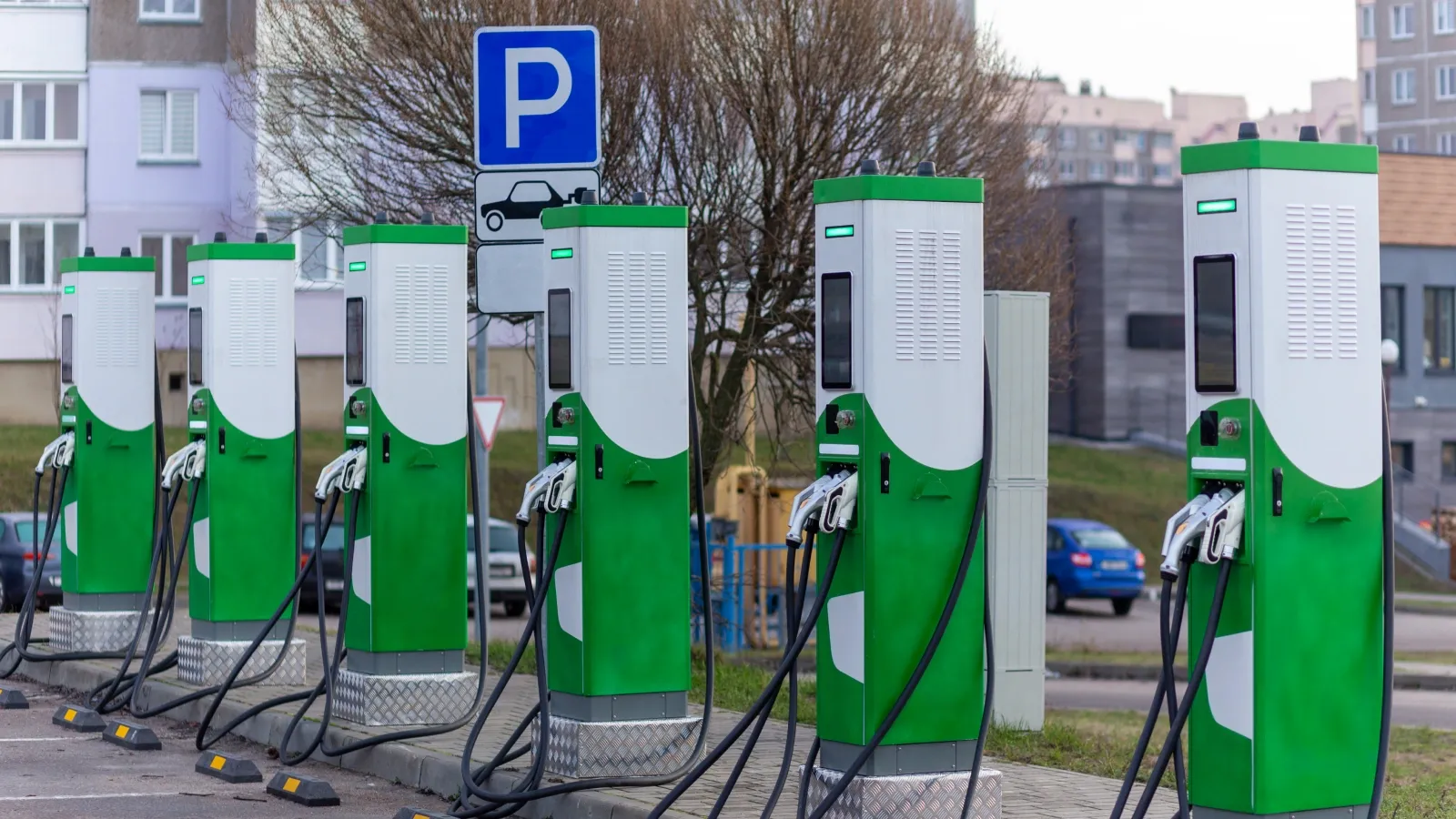
Industrial • Digital Products • ERP: Digitizing EV Charger Manufacturing with a Smart ERP Platform
Digitizing EV Charger Manufacturing with a Smart ERP Platform
Imagine predicting product demand with laser precision—cutting holding costs, optimizing stock levels, and boosting revenue, all while saying goodbye to guesswork.
-
Logistics • Software & Platforms • Cloud & DevOps • Internet of Things (IoT): From Manual Chaos to Full Control: Fuel & Fleet Management System for a Logistics Company in Canada
From Manual Chaos to Full Control: Fuel & Fleet Management System for a Logistics Company in Canada
Managing fuel consumption, fleet operations, and workforce activities is a critical challenge for logistics companies. Manual processes often result in fuel discrepancies, billing errors, an…

-
Software & Platforms • Internet of Things (IoT): From Congestion to Control: How AI-Powered Vision Transformed Urban Traffic Monitoring in Australia
From Congestion to Control: How AI-Powered Vision Transformed Urban Traffic Monitoring in Australia
AI-enabled traffic monitoring system using computer vision, deep learning, and generative AI, for urban Traffic Monitoring

-
Logistics • Digital Twin: Reduced Operational Inefficiencies by 32% with a Real-Time Warehouse Digital Twin
Reduced Operational Inefficiencies by 32% with a Real-Time Warehouse Digital Twin
How a real-time warehouse digital twin reduced picking inefficiencies by 32%, improved the real-time inventory dashboard, and accelerated dispatch cycles.

-
Healthcare • AWS • Data & AI: Scalable AI-Driven Medical Documentation Platform for Healthcare
Scalable AI-Driven Medical Documentation Platform for Healthcare
AI-powered transcription for smarter clinical documentation

-
Industrial • Digital Products • Internet of Things (IoT): Achieving 50% Better Diagnostics and 30% Higher Productivity Through BLE Mobile Solutions
Achieving 50% Better Diagnostics and 30% Higher Productivity Through BLE Mobile Solutions
What if generator downtime could be reduced by 35%, servicing efficiency improved by 40%, and diagnostics accuracy increased by 50%, all through a single mobile app?


Lets Talk
Have a challenge?Let us know.