

Multi-Agent AI: Why the Next Enterprise Revolution Won’t Be One AI, But Many
Something broke with single agents, and enterprises are starting to work out what it was.
 : Multi-Agent AI: Why the Next Enterprise Revolution Won’t Be One AI, But Many


Most digital twin initiatives remain static, limited by poor integration or analytics. At Technostacks, we design living, connected twins that span from product lifecycle management to plant operations. These systems continuously respond to real-time data, blending AI, simulation and domain expertise to drive intelligent change. The result is a twin that acts as a proactive agent, not a passive model.
faster detection of design flaws through digital simulation
energy savings in smart infrastructure via real-time optimization
reduced unplanned downtime enabled by AI-driven predictive maintenance and closed-loop optimization
Your digital twin should evolve as your operations do, pulling from past records, current performance, and future simulations to continuously drive real-world decisions. We help transform one-off models into living systems that learn, adapt, and guide daily business outcomes.


High fidelity 3D/2D modeling

IoT sensor data ingestion & time series sync

AI/ML integration for prediction and control

BIM, PLM, and CAD integration

Simulation engines (physical, thermal, structural)

Edge-cloud sync, data pipeline engineering
Unify IoT, OT, and IT systems into a single source of truth for seamless visibility.
Apply AI/ML to simulate outcomes, predict issues, and trigger timely alerts.
Deliver tailored insights for technicians, operators, and C-suite stakeholders.
Build twins that don’t just reflect operations but take proactive action.
Our Twin-building playbook
Define what the twin should track, simulate, or control by selecting key assets, KPIs, and its role (monitoring or orchestration).
Aggregate sensor data, logs, and historical records while establishing secure, scalable cloud and edge pathways.
Build CAD/BIM-integrated models, run thermal and structural simulations, and establish baseline system behaviors.
Train predictive models and define adaptive control rules based on anomalies, trends, and optimization targets.
Deploy the twin with live monitoring, real-time alerts, and full bidirectional data flow across teams.
Incorporate live feedback, user input, and external conditions to refine and evolve the twin.
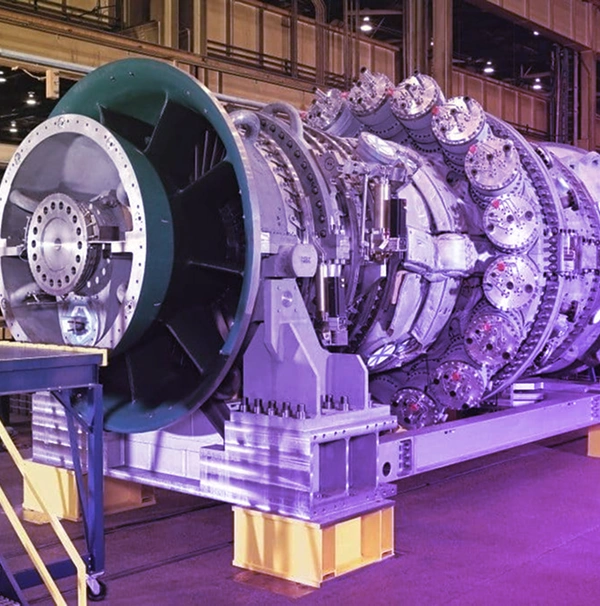
Cut unplanned downtime by 30–50% with predictive maintenance.
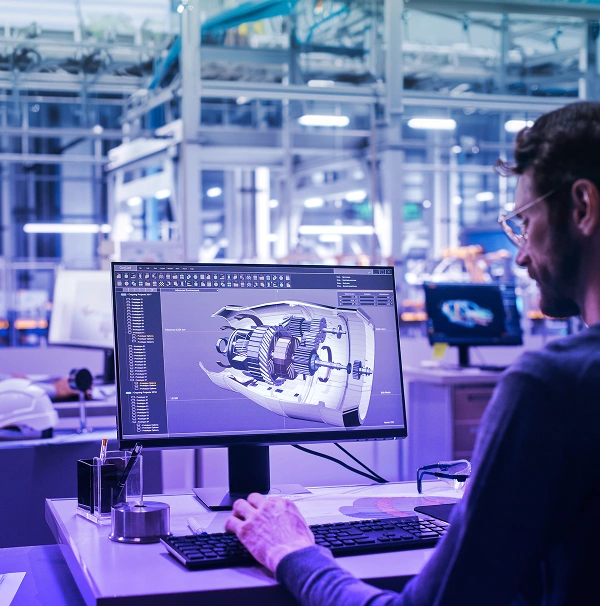
Accelerate launches by 25% using virtual prototyping and simulation.
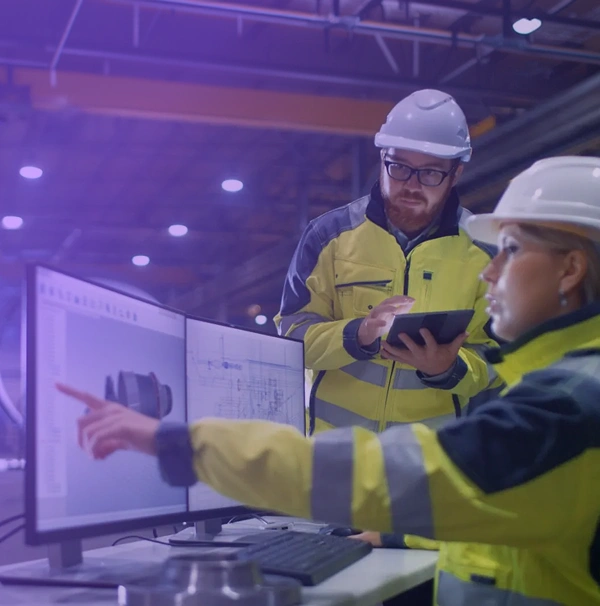
Gain continuous insight across the shop floor, buildings, and full asset lifecycles.
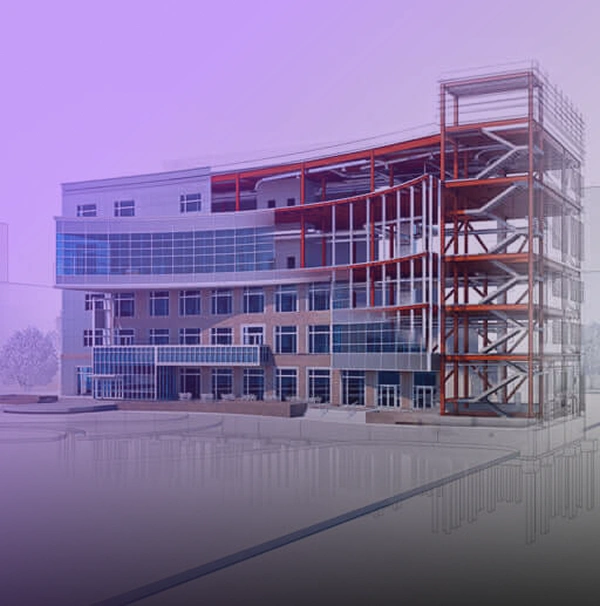
Make simulation-backed decisions that minimize failures and optimize spend.
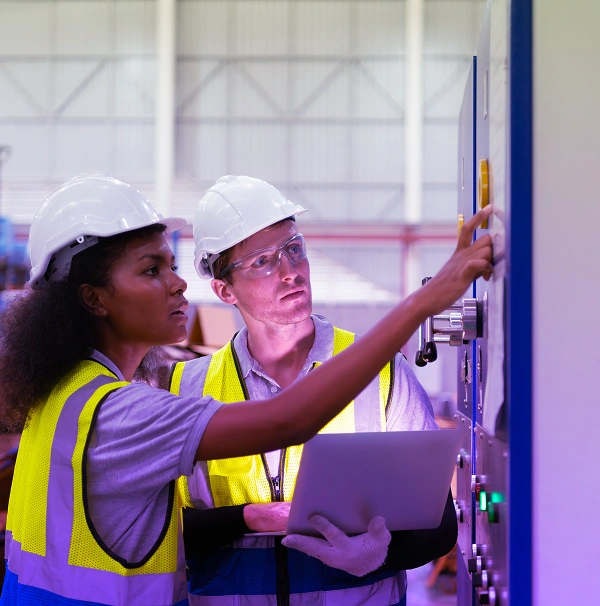
Predict performance and failures with greater precision.

Enable teams to align and act faster through shared digital environments.

Optimize energy, emissions, and waste for long-term efficiency.
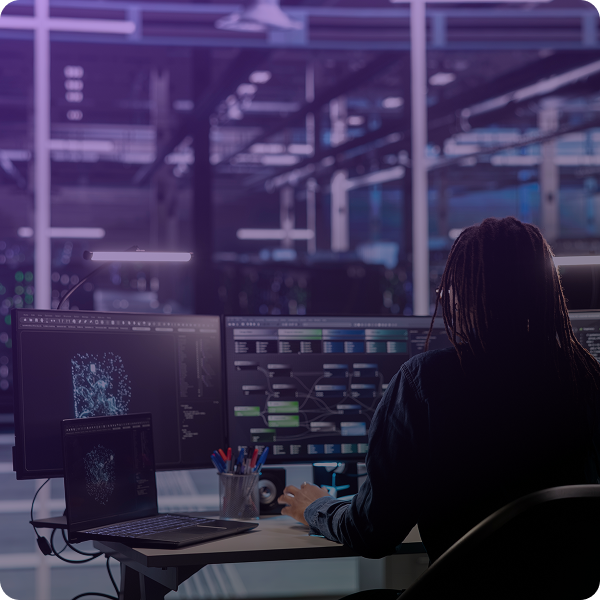

Something broke with single agents, and enterprises are starting to work out what it was.
: Multi-Agent AI: Why the Next Enterprise Revolution Won’t Be One AI, But Many
A construction project can only move as fast as its materials, vendors, and contractors allow, yet procurement is where many real estate developers quietly lose control of cost.
: How Construction Procurement Connects Material Requirements, Contractors, and Project Cost
How Agentic AI Is Revolutionizing Healthcare Workflows Today.
: How Agentic AI Is Reshaping the Future of Healthcare
In real estate and construction, project progress and customer payments are more closely linked than most organizations manage them.
: Construction-Linked Billing in Real Estate ERP
A real estate project doesn’t begin when construction starts. It begins much earlier with identifying the right land, evaluating its development potential, completing legal due diligence, securing approvals, and converting that opportunity into a structured project. A real estate land management ERP connects those early stages land, development agreements, legal checks, and statutory approvals to…
: Real Estate Land Management ERP: Acquisition to Project Readiness
The numbers moved fast. The multi-agent AI market reached $6.25 billion in 2025.
: The Rise of the AI Workforce: How Multi-Agent Systems Will Reshape Business Operations by 2027
Most businesses that buy Zoho CRM never use more than 30% of what it can do. They set up contacts, run a pipeline, maybe
: Turning Zoho CRM Into a Custom Business Workflow: Inside a Client Implementation
For manufacturing businesses, an order does not end when the customer places it. That order must trigger production planning, material availability checks, procurement, inventory movements, quality checks, and eventually dispatch. When these processes run across spreadsheets, disconnected software, and manual approvals, even a simple order can create operational bottlenecks. Production teams may not know whether…
: Connecting Production, Inventory and Orders: How We Solved a Complex ERP Workflow
How to Add Agentic AI to What You’ve Already Built.
: Is Your Legacy Digital Product Ready for the Agentic AI Era?
Warehouse simulation & optimization
faster order processing and 11% lower handling costs with a 3D twin of a multi-floor facility using conveyor systems and robots.
Solar power plant yield optimization
faster order processing and 11% lower handling costs with a 3D twin of a multi-floor facility using conveyor systems and robots.
Urban mobility & emergency planning
faster order processing and 11% lower handling costs with a 3D twin of a multi-floor facility using conveyor systems and robots.
Sales enablement using interactive twins
faster order processing and 11% lower handling costs with a 3D twin of a multi-floor facility using conveyor systems and robots.
Yes. We specialize in integrating PLCs, SCADA systems, ERP/MES software, and more. Your existing systems don’t have to be replaced—only extended.
Depending on the complexity, initial MVPs take 6–12 weeks using our accelerators. Full-scale twins across multiple facilities can take longer with phased rollouts.
All three are supported. We work with AWS, Azure, and hybrid environments—depending on your IT and compliance needs.
3D twins, process flow maps, real-time dashboards, and even spatial maps via GIS integration. Interfaces are customized per user roles.
Absolutely. We support use cases in real estate, smart buildings, energy, logistics, healthcare, and even R&D facilities.