

Connecting Production, Inventory and Orders: How We Solved a Complex ERP Workflow
For manufacturing businesses, an order does not end when the customer places it. That order must trigger production planning, material availability checks, procurement, inventory movements, quality checks, and eventually dispatch.
When these processes run across spreadsheets, disconnected software, and manual approvals, even a simple order can create operational bottlenecks. Production teams may not know whether materials are available, procurement may not see upcoming demand, and management may lack real-time visibility.
This is where ERP workflow automation can make a measurable difference.
The ERP Workflow Challenge
A modern manufacturing ERP needs to connect the entire operational chain:
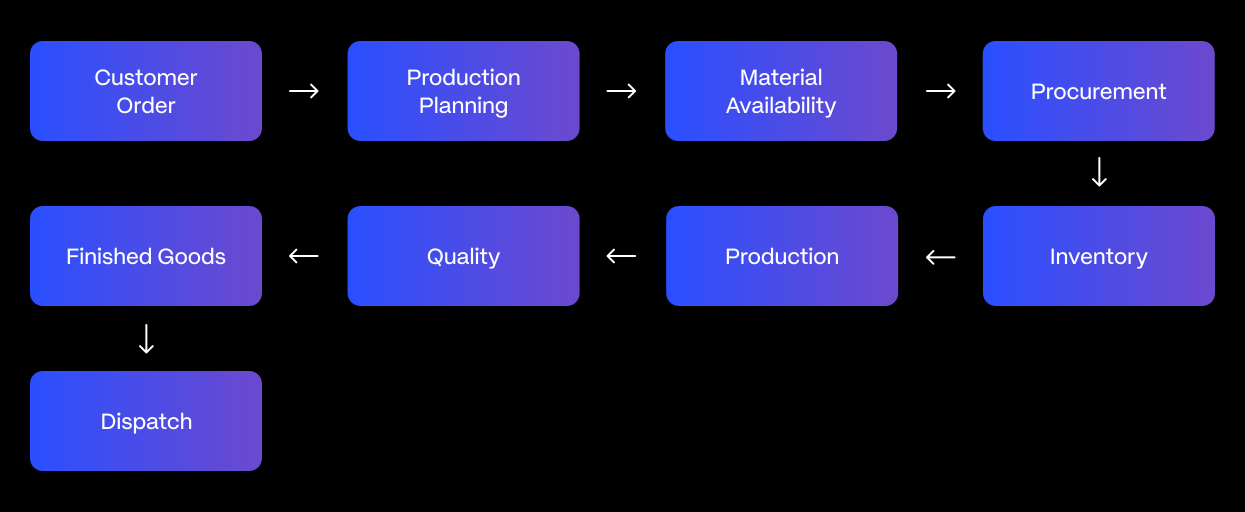
The challenge is that each stage often belongs to a different team.
In one manufacturing engagement, we found that production planning had limited visibility into inventory, procurement relied on manual approvals, and raw materials, semi-finished goods, and finished products were difficult to track across operations.
The business also needed better traceability for outsourced job work, quality inspections, warehouses, and vendor activities.
The problem was not simply a lack of software. The real problem was that business processes were not connected through one workflow.
Connecting Orders With Production and Inventory
The first step was creating a centralized manufacturing ERP that could connect demand with production and inventory.
When production plans are created, the system checks inventory availability and identifies material shortages. Procurement workflows can then generate purchase requisitions and route them through predefined approval processes.
Once materials are received, inventory records are updated centrally. Production teams can track raw material issuance, assembly, testing, packaging, and finished goods movement within the same system.
This creates a connected flow:
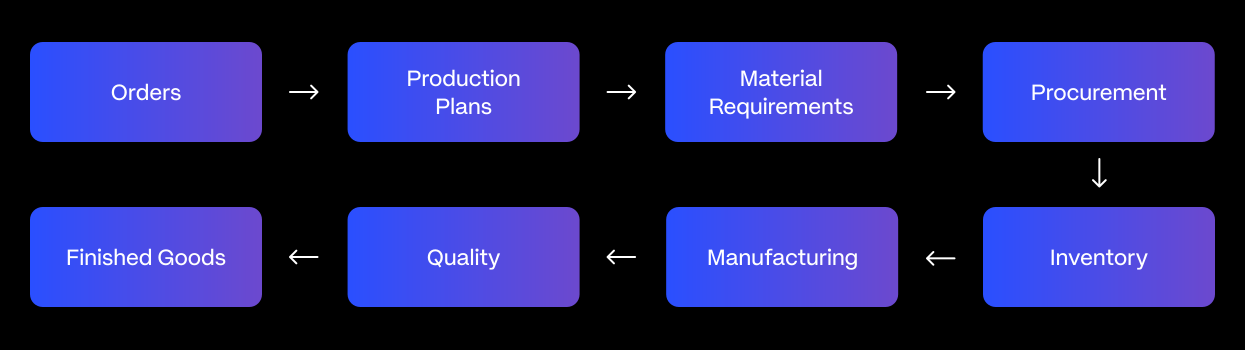
Instead of teams working from separate spreadsheets, every department works with the same operational data.
Automating Procurement and Inventory Decisions
Inventory management becomes significantly more effective when it is connected to production planning.
The ERP can provide visibility into:
- Available raw materials
- Material shortages
- Reorder levels
- Purchase requirements
- Warehouse stock
- Semi-finished goods
- Finished products
- Stock movements
In our EV charger manufacturing ERP project, Technostacks implemented centralized inventory and warehouse management with production planning, procurement workflows, quality management, and job-work tracking. The solution delivered 42% improvement in inventory accuracy, 28% faster procurement cycles, and 35% faster production planning.
Building Traceability Into the Workflow
Manufacturers often need to know where a material came from, where it moved, who approved it, and how it became part of the finished product. That requires traceability across procurement, inventory, production, quality, and warehouse operations.
The ERP workflow we designed included audit trails, role-based approvals, digital quality inspections, job-work tracking, and material movement records. This approach improved manufacturing traceability by 45% in the EV charger manufacturing project and reduced manual administrative work by 50%.
ERP Flexibility Matters as Much as Integration
Connecting systems is only part of the solution. Manufacturing businesses also have industry-specific workflows that standard ERP configurations may not handle effectively.
For a global chemical manufacturer, Technostacks implemented Zoho One with Zoho Creator to support custom manufacturing workflows including BOM management, production planning, QR-based goods movement, and predictive procurement.
The transformation reduced software and vendor-related costs by 60%, accelerated procurement by 40%, and achieved 100% real-time visibility across sales, finance, and production. These results demonstrate why ERP implementation should be designed around business processes rather than forcing operations into rigid software workflows.
What a Connected Manufacturing ERP Should Deliver
A well-designed ERP workflow should give manufacturing leaders a single view of operations while allowing each department to work within its own responsibilities.
Key capabilities include:
Production planning:
- Connect demand with capacity and material availability.
Inventory management:
- Track materials, stock movements, warehouses, and finished goods.
Procurement automation:
- Trigger purchasing based on production requirements and approvals.
Order management:
- Connect customer demand with production and fulfillment.
Quality management:
- Digitize inspections, approvals, rejections, and traceability.
Business intelligence:
- Provide real-time dashboards for production, procurement, inventory, and finance.
Why Custom ERP Workflow Design Matters
Every manufacturer has different BOM structures, approval hierarchies, warehouse processes, production stages, and reporting requirements.
That is why successful ERP modernization is not simply about implementing another software platform. It is about designing the right digital workflow around the business.
At Technostacks, we combine ERP consulting, custom development, workflow automation, integrations, and business intelligence to build manufacturing solutions that connect production, inventory, procurement, orders, and finance.
If your teams are still moving information between spreadsheets, disconnected systems, or manual approvals, the opportunity may not be another tool—it may be a connected ERP workflow designed around how your business actually operates.
How Technostacks Helps Connect Complex ERP Workflows
Technostacks helps manufacturing businesses connect production, inventory, sales, procurement, and order management through customized ERP solutions. We first map the existing workflow, identify data gaps and manual handoffs, and then design an integrated system that keeps operational data synchronized across departments.
Our experience includes building ERP solutions for complex manufacturing environments. For example, our EV charger manufacturing ERP solution integrated production planning, inventory, orders, and operational workflows, while our chemical manufacturing ERP solution streamlined processes and improved cost efficiency.
Whether you need ERP integration, custom workflows, manufacturing automation, or real-time dashboards, the right architecture can turn disconnected processes into a connected operational system.
Conclusion
Complex ERP workflows become difficult when production, inventory, and orders operate in separate systems. Connecting these processes creates better visibility, reduces manual work, and helps manufacturing teams make faster, data-driven decisions.
Technostacks helps businesses modernize these workflows with custom ERP development, system integrations, and manufacturing-focused digital solutions built around their existing processes. If your ERP workflow involves too many manual steps or disconnected systems, it may be time to redesign the process rather than add another tool.
Talk to Technostacks about your complex ERP workflow.
FAQs
1. How do you connect production, inventory, and orders in an ERP?
An integrated ERP connects sales orders with production planning, inventory availability, procurement, and fulfillment, creating a single flow of operational data.
2. What problems does an integrated manufacturing ERP solve?
It can reduce manual data entry, inventory mismatches, production delays, duplicate records, and disconnected workflows between sales, production, and warehouse teams.
3. Can ERP systems automate production and inventory workflows?
Yes. Custom ERP workflows can automate tasks such as material allocation, stock updates, production triggers, purchase orders, and order-status updates based on defined business rules.
4. Can existing ERP systems be customized for complex manufacturing workflows?
Yes. Existing ERP platforms can often be extended through custom modules, APIs, integrations, and workflow automation to support industry-specific processes.
5. How can Technostacks help with ERP workflow automation?
Technostacks designs and develops customized ERP solutions that connect production, inventory, orders, procurement, and business systems to improve visibility and operational efficiency.