

Most digital twin initiatives remain static, limited by poor integration or analytics. At Technostacks, we design living, connected twins that span from product lifecycle management to plant operations. These systems continuously respond to real-time data, blending AI, simulation and domain expertise to drive intelligent change. The result is a twin that acts as a proactive agent, not a passive model.
faster detection of design flaws through digital simulation
energy savings in smart infrastructure via real-time optimization
reduced unplanned downtime enabled by AI-driven predictive maintenance and closed-loop optimization
Your digital twin should evolve as your operations do, pulling from past records, current performance, and future simulations to continuously drive real-world decisions. We help transform one-off models into living systems that learn, adapt, and guide daily business outcomes.
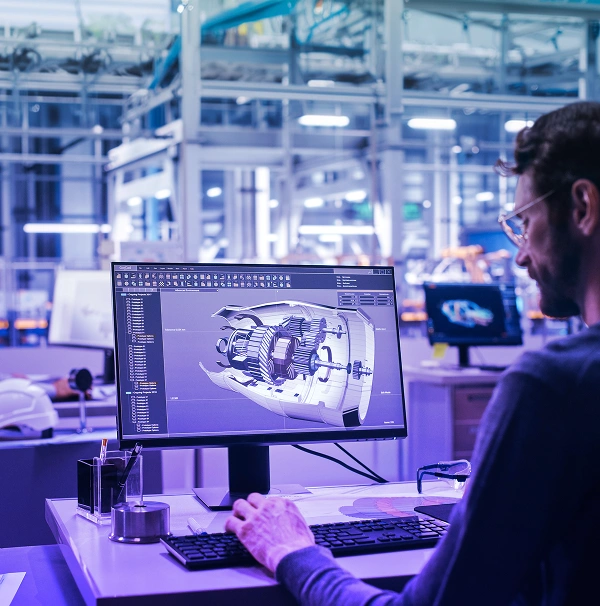
High fidelity 3D/2D modeling
IoT sensor data ingestion & time series sync
AI/ML integration for prediction and control
BIM, PLM, and CAD integration
Simulation engines (physical, thermal, structural)
Edge-cloud sync, data pipeline engineering
Unify IoT, OT, and IT systems into a single source of truth for seamless visibility.
Apply AI/ML to simulate outcomes, predict issues, and trigger timely alerts.
Deliver tailored insights for technicians, operators, and C-suite stakeholders.
Build twins that don’t just reflect operations but take proactive action.
Our Twin-building playbook
Define what the twin should track, simulate, or control by selecting key assets, KPIs, and its role (monitoring or orchestration).
Aggregate sensor data, logs, and historical records while establishing secure, scalable cloud and edge pathways.
Build CAD/BIM-integrated models, run thermal and structural simulations, and establish baseline system behaviors.
Train predictive models and define adaptive control rules based on anomalies, trends, and optimization targets.
Deploy the twin with live monitoring, real-time alerts, and full bidirectional data flow across teams.
Incorporate live feedback, user input, and external conditions to refine and evolve the twin.
Cut unplanned downtime by 30–50% with predictive maintenance.
Accelerate launches by 25% using virtual prototyping and simulation.
Gain continuous insight across the shop floor, buildings, and full asset lifecycles.
Make simulation-backed decisions that minimize failures and optimize spend.
Predict performance and failures with greater precision.
Enable teams to align and act faster through shared digital environments.
Optimize energy, emissions, and waste for long-term efficiency.

Our in-house experts explore the evolving possibilities of Digital Twin systems across industries.

Blog
6 min readYour eCommerce business may be generating orders every day, but hidden operational gaps could be silently reducing revenue. Many businesses focus heavily on increasing traffic and customer acquisition while overlooking what happens after customers enter the sales journey. A customer adds products to their cart and moves toward checkout. Then something fails behind the scenes.…

Blog
9 min readWhat is Industry 5.0 and how does it differ from Industry 4.0? Industry 5.0 prioritizes human-AI collaboration where machines handle data processing and pattern detection while humans focus on judgment, creativity, and strategy. Industry 4.0 automated production through connectivity and data. Industry 5.0 augments humans using that data. The shift emphasizes worker resilience, sustainability, and…

Blog
11 min readAI-powered predictive maintenance reduces unplanned downtime by up to 40% by connecting IoT monitoring sensors to machine learning models that detect equipment failure before it happens. Industrial businesses that deploy predictive maintenance AI report 25–30% lower maintenance costs and 70–75% fewer unplanned breakdowns compared to traditional scheduled maintenance programs. What Is AI-Powered Predictive Maintenance? Predictive…

Blog
7 min readVendor management is a significant yet highly complex aspect of business operations. From onboarding suppliers to ensuring compliance, companies often struggle with fragmented vendor-based processes. This leads to operational delays, errors & inefficiencies that directly impact business performance. An effective vendor approval system acts as the backbone of vendor management. It ensures that suppliers go…

Blog
13 min readBuilding compliant agentic AI systems for industrial growth.

Blog
8 min readAutomate, Integrate, and Scale Operations with Zoho Creator

Blog
8 min readThe Last-Mile Delivery Crisis Driving AI Adoption in US E-Commerce

Blog
7 min readWhy Zoho CRM implementations fail after year 2 and how to fix them.
Warehouse simulation & optimization
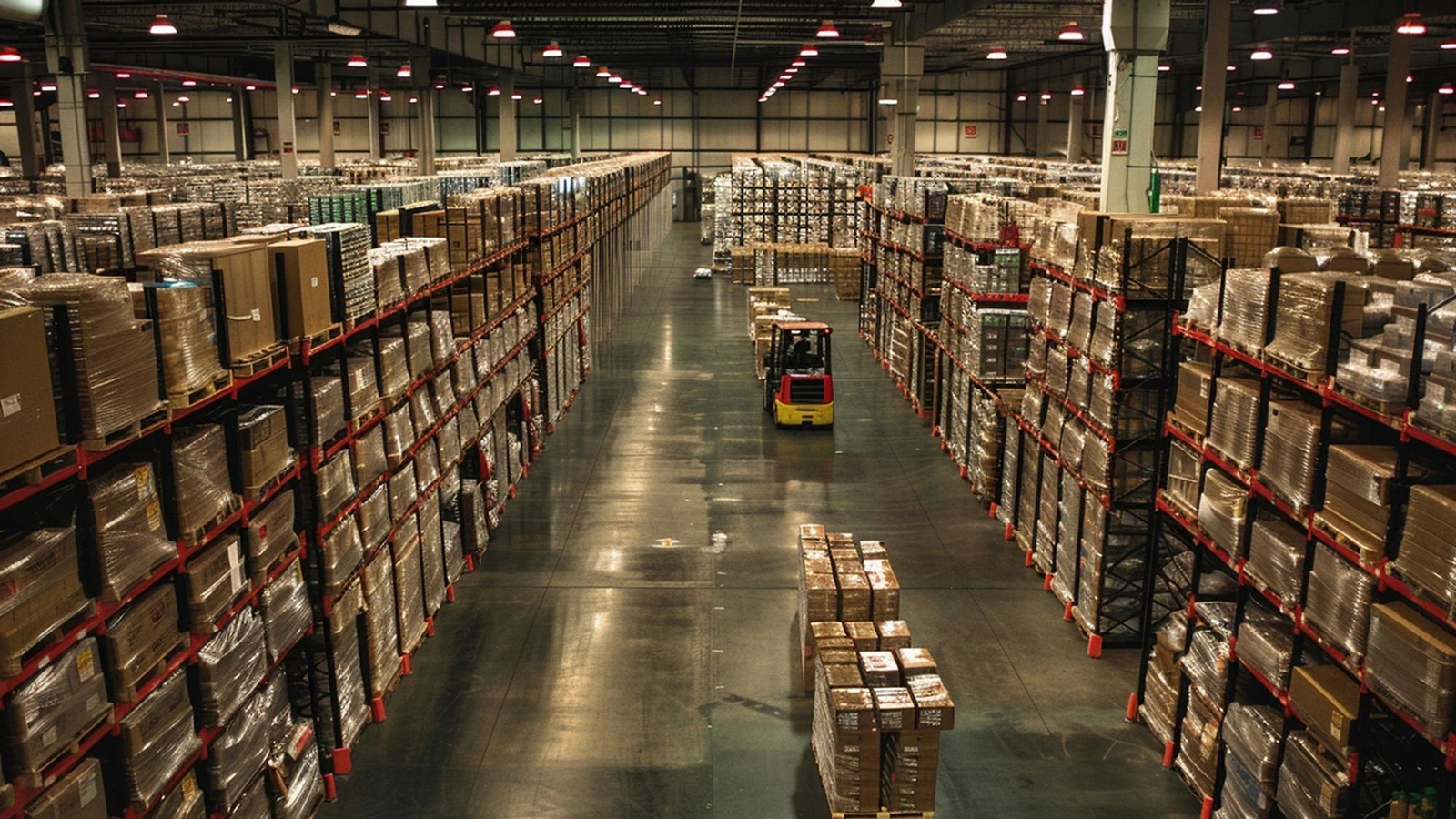
faster order processing and 11% lower handling costs with a 3D twin of a multi-floor facility using conveyor systems and robots.
Solar power plant yield optimization
higher energy output and 22% less unplanned downtime through irradiance simulations and predictive maintenance planning.
Urban mobility & emergency planning
better emergency response and 18% smoother commute flow using a real-time city traffic twin to simulate congestion, optimize signals, and model fire truck routes.
Sales enablement using interactive twins
shorter real-estate sales cycles and 27% higher conversion with immersive 3D touch-table experiences in sales centers.
Yes. We specialize in integrating PLCs, SCADA systems, ERP/MES software, and more. Your existing systems don’t have to be replaced—only extended.
Depending on the complexity, initial MVPs take 6–12 weeks using our accelerators. Full-scale twins across multiple facilities can take longer with phased rollouts.
All three are supported. We work with AWS, Azure, and hybrid environments—depending on your IT and compliance needs.
3D twins, process flow maps, real-time dashboards, and even spatial maps via GIS integration. Interfaces are customized per user roles.
Absolutely. We support use cases in real estate, smart buildings, energy, logistics, healthcare, and even R&D facilities.